Replaces





Frequently bought together
Part Details
About TRQ:
TRQ is a trusted brand dedicated to making every repair a success story by combining premium parts with easy installation. Each TRQ part is engineered by a team of automotive experts to meet or exceed OEM standards, delivering enhanced performance and maximum longevity. With rigorous in-house testing, the brand ensures superior fit and function across every product line. TRQ also provides customers with best-in-class, step-by-step installation videos—so you can complete repairs with confidence, whether you're a first-time DIYer or an industry professional.
Product Features
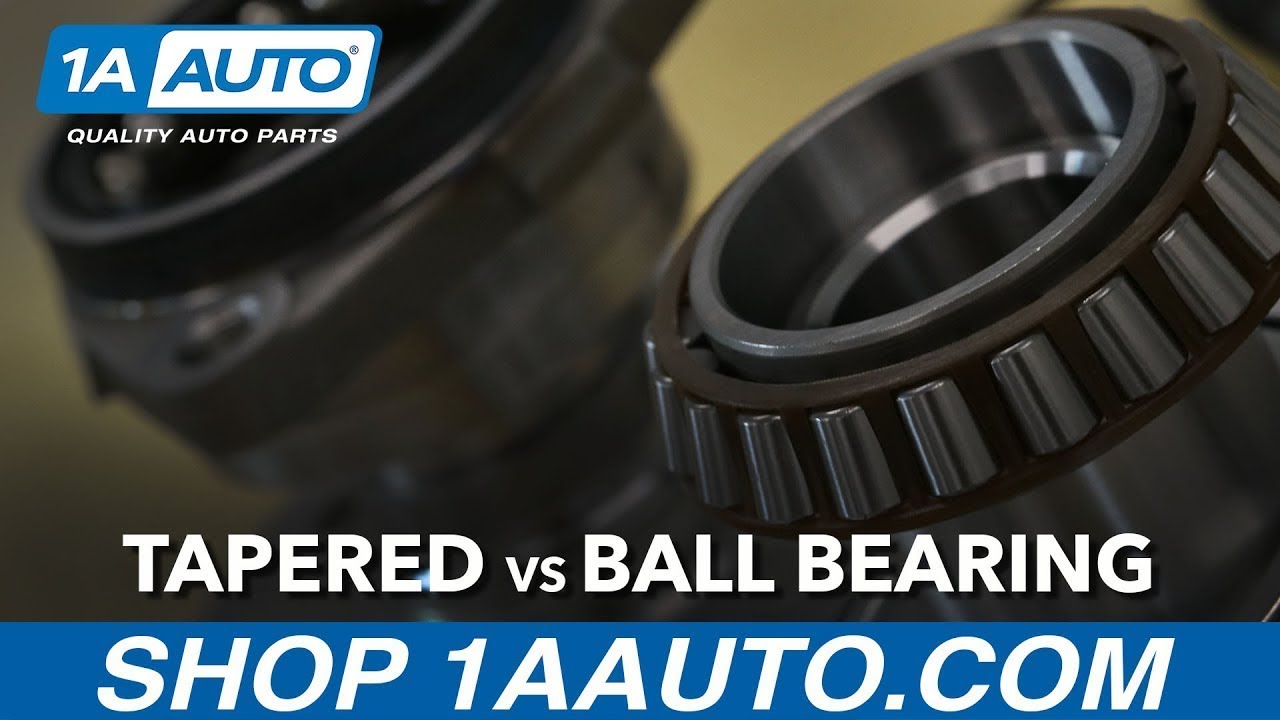
What are Tapered Bearings and Why Use Them? Tapered bearings use rollers shaped like flat-topped cones and two races angled from the outside in of the bearing. This angle makes the bearing better at handling forces exerted on the bearing during cornering (known as axial load) in trucks and large cars. Your model came from the factory with tapered bearings. Roller ball bearings work well for smaller cars, but replacing a tapered bearing with a roller ball bearing increases wear and failure.
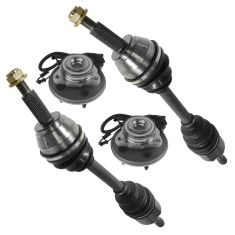
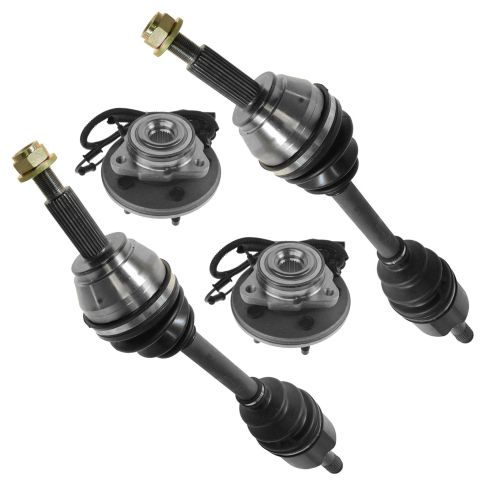
TRQ drivetrain kits are manufactured using premium raw materials to restore original performance. Each TRQ drivetrain component is designed to be a direct, maintenance-free replacement to the stock unit. To extend the service life of your drivetrain, TRQ recommends replacing wheel hubs, bearings, and constant velocity (CV) drive axles at the same time to ensure even wear of components and improved ride comfort. All products are fit and road-tested in our Massachusetts R&D facility to ensure we deliver on our promise of Trusted Reliable Quality.
CV axles are designed to transmit the power from your vehicle's drivetrain to the wheels while being able to flex and pivot to the demands of the steering and suspension systems. If your vehicle is making clicking noises at lower speeds or when making turns, it may be time to replace your CV axles with our 100% brand new assemblies.
Our steering and suspension components are pre-greased and sealed for long life and do not require the extra maintenance typically required by greaseable versions.
Attention California Customers:
 WARNING: This product can expose you to chemicals including Lead and Lead Compounds, which are known to the State of California to cause cancer, and birth defects or other reproductive harm. For more information, go to www.P65Warnings.ca.gov.
Lifetime Warranty
This item is backed by our limited lifetime warranty. In the event that this item should fail due to manufacturing defects during intended use, we will replace the part free of charge. This warranty covers the cost of the part only.
FREE Shipping is standard on orders shipped to the lower 48 States (Contiguous United States). Standard shipping charges apply to Hawaii and Alaska.
Shipping is not available to a P.O. Box, APO/FPO/DPO addresses, US Territories, or Canada for this item.
Expedited is available on checkout to the United States, excluding Alaska, Hawaii.
Final shipping costs are available at checkout.

Created on:
Tools used
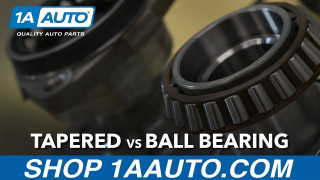
Hi everyone. Sue here at 1A Auto, and today we're gonna talk bearings. The difference between a roller bearing and a ball bearing type.
While both a roller bearing and tapered bearings work in the same manner. Tapered bearings use tapered rollers shaped like flat topped cones and two races angled from the outside to the inside of the bearing. The rollers have a large contact area which is what makes them better than roller bearings at handling forces exerted on the bearing during cornering in trucks and large cars.
For applications that require it, the TRQ brand offers tapered roller bearing style wheel bearings that match OEM specifications where other brands do not.
Roller ball bearings work well for small cars but replacing a tapered bearing with a roller ball bearing will result in increasing wear and faster failure.
So now that you know all parts aren't created equal, you can purchase your TRQ bearing at 1aauto.com.
Tools used
Brought to you by 1AAuto.com, your source for quality replacement parts and the best service on the Internet.
Hi, I'm Mike from 1A Auto. I hope this how-to video helps you out, and next time you need parts for your vehicle, think of 1AAuto.com. Thanks!
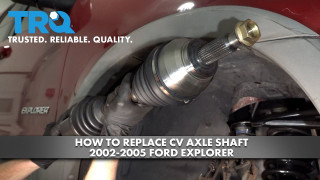
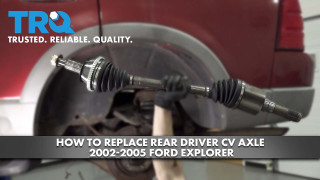
In this video, we're going to show you how to replace a front CV axle shaft on this 2003 Mercury Mountaineer. We'll show you on the passenger side, but the driver side is the same procedure. The items you'll need include a new front CV axle shaft from 1AAuto.com, 16mm, 18mm, 19mm, and 30mm socket and ratchet, a piece of pipe for extra leverage, jack and jack stands, torque wrench, and a pry bar.
Remove the center cap using a screwdriver. Then the hub nut is a 30mm nut, and you can use a ratchet with a pipe. If you have a breaker bar, something with more leverage, you can do that. You basically want to remove the nut the whole way at this point. We'll just fast-forward as Mike removes those 19mm lug nuts. If you don't have air-powered tools, you want to loosen them while the vehicle's on the ground, raise the vehicle, and remove them the rest of the way. Now you can pull the wheel free.
Now remove this 18mm nut. We'll fast-forward as Mike does that, and you can see he's using a piece of pipe for some extra leverage. Once you remove that nut, just put it back on a few threads. Then take a hammer and hammer your wheel knuckle. You want to do this until it breaks free and slides down by itself.
On the back of your axle here, just place a pry bar. Just hammer the axle out. Now remove that 18mm nut and pull your wheel knuckle forward. You want to make sure that the axles free, so that it won't get damaged. Remove the stabilizer link. We're just showing you the driver's side. You use 15mm socket and ratchet on top and the 16mm socket and ratchet on the bottom. Remove that top nut. Take the link bolt out, and remove the link. That's if everything works out. On the side we're working on its broken, so we use some penetrating oil.
One thing you do is - this is pretty typical - it breaks off up top here, you saw where you just filled it up with penetrating oil, and then we're just kind of messing around with it. We lock some locking pliers onto it. Now we've got that penetrating oil really helped the bolt start up. We've basically broken the plastic here. Now this plastic tube will slide off. We're just going to use a hammer and chisel to remove the rest of the plastic, this of course is worst case scenario. You just want to remove the plastic then use some locking pliers. Then just remove the nut on the bottom, or at least loosen it up as much as you can. Then just hammer this down and put. Turn your wheel. Then come back here and just pull your axle out. Then slide it back, and pull it out of the hub. Then push it down and out of the control arm.
To reinstall the axle, feed it kind of off to the side of the differential case, and then in. Once you've got it into the hub, just replace that hub nut. Just kind of tighten it up preliminarily. Then take the back end of the axle, and feed it back into place. You just want to keep pushing and moving it up and down, and pushing back until it goes all the way back into place.
Push the stud back into the wheel knuckle. Then replace that 19mm nut. Make sure your axle's pushed all the way back in. It should just feed right back into place. Then tighten up that 19mm nut. Then just torque that nut to 90 ft lbs.
Next, I'm going to reinstall the sway bar link, and you want to jack up the other side just slightly. Now replace your sway bar link. The other it should go in is washer, bushing, control arm. Then bushing, washer, the tube. Then another washer, then the bushing, then your sway bar. Then another bushing, another washer, then the nut. You want to just tighten that nut preliminarily, then release the jack.
To tighten these up, you want to have the car, I've got the jack stands supporting the control arm, and the car pretty much level, so it's at its ride position. Then you just want to tighten this up until all of these bushings are just squeezed down, and they're contacting the washer as well.
Replace your wheel. Then replace all the lug nuts and tighten them preliminarily. Then you'd want to lower the vehicle and tighten them the rest of the way. Then torque each of these in a crossing pattern, to 100 foot-pounds. Now torque that hub nut to 180 foot-pounds. Now replace your hub cap. Just line it up and hit it back into place.
We hope this video helps you out. Brought to you by www.1AAuto.com, your source for quality replacement parts and the best service on the Internet. Please feel free to call us toll-free, 888-844-3393. We're the company that's here for you on the Internet and in person.
Tools used
Brought to you by 1AAuto.com, your source for quality replacement parts and the best service on the Internet.
Hi, I'm Mike from 1A Auto. I hope this how-to video helps you out, and next time you need parts for your vehicle, think of 1AAuto.com. Thanks.
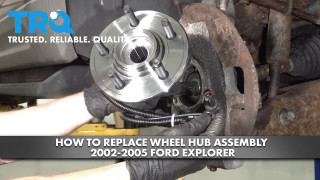
In this video, we're going to show you how to replace a front hub on this 2003 Mercury Mountaineer. We show you on the passenger's side, but the driver's side is the same procedure. It's the same part and similar process on these Mountaineers for 2002 to 2005. The items that you'll for this are a new front hub from 1AAuto.com; a 14, 15, 18, 19 and 30mm socket and ratchet; a piece of pipe for some extra leverage; 5mm Allen bit or Allen wrench; flat blade screwdriver; jack and jack stands; and torque wrench.
Use a flat blade screwdriver to pry off the center cap. Once it comes off some you can just put your fingers underneath and pull it off. Then, use a 30mm socket to loosen up that center hub nut and remove it with a ratchet and a pipe for some extra leverage. You can also use a larger breaker bar. If you have the benefit of air tools, you can do this step later as you'll see us do but we're just showing you how to do this in the beginning. Here you'd also want to loosen the lug nuts up with a 19mm socket and breaker bar or ratchet and pipe. We're just going to speed it up here. We've raised and secured the vehicle and we're using a ratchet or an air gun to remove the lug nuts, wheel and tire.
Now, just open up this clip with a flat blade screwdriver. You just have to pry the tab and pull it open. Then just pry the harness out of this clip and pull it out of these three. Then you want to remove these two 14mm bolts. We'll just fast forward as Mike does that. Now using a flat blade screwdriver, just pry right here and that will push the piston in on the caliper and make it easier to pull the caliper off, do it again down here, and pull the caliper free. Then you want to set it up and out of the way so we're just going to put it up here. Just to make sure it doesn't fall down use a wire tie to just secure it up there.
Now, pry out your brake pads. The best way to tell the life left in your pads: this little slot right here is a wear mark so you can see it pretty much goes away once you have about an 1/8 of an inch of pads left. Like I said before, these pads have quite a bit of life left on them.
Now, remove these two 18mm bolts. You can see he's using a piece of pipe for some extra leverage. When you pull out the last bolt, the caliper bracket pulls free. Now pull your rotor off.
Now up here, you just want to reach down here behind your radiator reservoir and just push on the tab on this harness and pull the harness free. Then just open up this clip up here with a flat blade screwdriver and pull the harness down.
Now if you don't have air powered tools, you want to remove this 30mm nut with the tire on and the wheel on the ground. If you do have air powered tools, you can remove it right now. Then just make sure the axle moves in and out. Then come back here and you want to remove these three 15mm bolts. We're just going to start off by spraying them with some penetrating oil and then using a piece of pipe for some extra leverage, just break them free and remove them. Now a tip on these: I start with 1/2 inch sized tools which are larger, heavier duty tools and once I get them loose I switch to 3/8 inch drive tools which are smaller and get in to the area a little better. It makes it a lot easier if you just turn your wheel so that you can get better access to this bolt back here.
Tap the hub with a hammer until it starts to move out. We realize that we have a bolt still in the hub a little bit so we're just going to remove that and then pull the hub free. We'll push the axle out of it.
On the left is the old hub. On the right is the new one from 1A Auto. You can see they're identical and they'll fit exactly same. Take your new hub and push it onto the axle with the ABS harness on the top and then just push it back into place. When you have it lined up, just replace those three 15mm bolts and tighten them up. Then torque each of those to 75 foot-pounds. Now we're just going to use our old clips, so we're just going to pry off the new clips and you could always just pry out your old clips and push these ones into place. Ours are in good condition so we're just going to use them. Feed the harness back up and get it up over the control arm and then just clip it back into that clip and push it back up into place. Replace the hub nut and just tighten that up preliminarily.
Take your rotor and push it into place and then replace a lug nut just to hold it there while you reassemble the caliper bracket and caliper. Now take your caliper bracket, line it up and then just replace those two 18mm bolts and tighten them up. Then torque both of those to 85 foot-pounds.
Just push your brake pads back into place and it helps if you just apply some brake grease to the tabs to help them go back in. Now remove your wire tie and pull your caliper back down. Move the C-stand and the brake pad and the caliper piston is pushed all the way in. Then take your caliper and push it back into place over your brake pads. You want to make sure that those slides push down underneath and line up. Once they're lined up, replace those two 14mm bolts and tighten them up. Then torque both of those to 25 foot-pounds.Then just push this back into those three clips, and then back into this bracket, and then close that final clip.
Wipe down any dirt that may have gotten on your rotor while replacing the caliper and then remove that lug nut, replace your wheel and then replace all of the lug nuts and tighten them preliminarily. Then you want to lower the vehicle and tighten them the rest of the way and then torque each of these in a crossing pattern to 100 foot-pounds. Now torque that hub nut to 180 foot-pounds. Now replace your hub cap. Just line it up and hit it back into place.
Then just grab your harness up here and push it back into the connector until it clicks.
Whenever you've done any work on your brakes, you just want to pump the brake pedal until it firms up. Then you want to do a stopping test from 5 miles per hour, then 10 miles per hour.
We hope this video helps you out. Brought to you by www.1AAuto.com, your source for quality replacement parts and the best service on the Internet. Please feel free to call us toll-free, 888-844-3393. We're the company that's here for you on the Internet and in person.

BHA52934