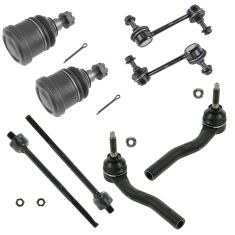
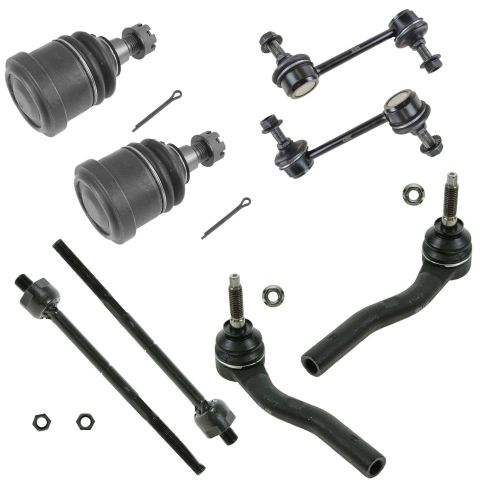
Replaces



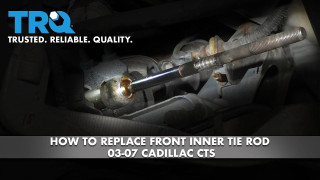

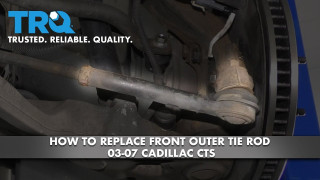
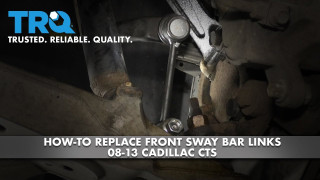
Frequently bought together
Part Details
About TRQ:
TRQ is a trusted brand dedicated to making every repair a success story by combining premium parts with easy installation. Each TRQ part is engineered by a team of automotive experts to meet or exceed OEM standards, delivering enhanced performance and maximum longevity. With rigorous in-house testing, the brand ensures superior fit and function across every product line. TRQ also provides customers with best-in-class, step-by-step installation videos—so you can complete repairs with confidence, whether you're a first-time DIYer or an industry professional.
Product Features
TRQ suspension kits are manufactured using premium raw materials and coatings for extended service life. Each TRQ suspension component is designed to be a direct, maintenance-free replacement to the stock unit. To extend the life of your steering and suspension components, TRQ recommends replacing components in pairs, sets, or kits. All products are fit and road-tested in our Massachusetts R&D facility to ensure we deliver on our promise of Trusted Reliable Quality.
Install Tip: When replacing steering components, have a professional alignment performed afterwards. This ensures proper tracking and even tire wear.
Our steering and suspension components are pre-greased and sealed for long life and do not require the extra maintenance typically required by greaseable versions.
Attention California Customers:
 WARNING: This product can expose you to chemicals including Lead and Lead Compounds, which are known to the State of California to cause cancer, and birth defects or other reproductive harm. For more information, go to www.P65Warnings.ca.gov.
Lifetime Warranty
This item is backed by our limited lifetime warranty. In the event that this item should fail due to manufacturing defects during intended use, we will replace the part free of charge. This warranty covers the cost of the part only.
FREE Shipping is standard on orders shipped to the lower 48 States (Contiguous United States). Standard shipping charges apply to Hawaii and Alaska.
Shipping is not available to a P.O. Box, APO/FPO/DPO addresses, US Territories, or Canada for this item.
Expedited is available on checkout to the United States, excluding Alaska, Hawaii.
Final shipping costs are available at checkout.
Created on:
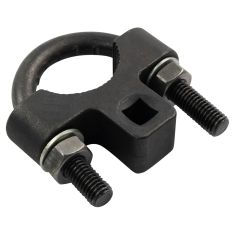
Tools used
Brought to you by 1AAuto.com, your source for quality replacement parts and the best service on the Internet.
Hi, I'm Mike from 1A Auto. I hope this how-to video helps you out, and next time you need parts for your vehicle, think of 1AAuto.com. Thanks.
In this video, we're going to show you how to replace the front wheel bearing and hub assembly in this 2006 Cadillac CTS.
Here are the items you'll need for this repair: 15mm, 19mm socket, ratchet, socket extension, breaker bar, torque wrench, 14mm wrench, rust penetrant, jack and jack stands
Using your 19mm socket and breaker bar, crack the lug nuts loose. Just about a turn is fine, you just want to make sure that there's no tension on them when you jack it up, and obviously you can't remove it with the weight of the vehicle on the tire. Once your lug nuts are loose, you can jack up the vehicle and secure it with jack stands.
You'll see on the rocker panel there's a small arrow, this indicates where the jack point is on the pinch weld under the vehicle, so we'll place our jack under there, bring the vehicle up until the wheel is off the ground, and we have enough height to get a jack stand underneath the car.
Directly in front of your jack, you'll notice this boxed frame-like piece of the unibody. That's the point we're going to use for our jack stand. Slowly lower the vehicle onto the stand. Once the vehicle has been raised and supported, we finish removing the lug nuts. Remove the wheel from the hub.
We're going to use a lift to make this easier to show you guys at home, but you should be able to do this in the driveway with a jack and jack stands. After raising and supporting your vehicle and removing the wheel, locate the nut for the sway bar link. There's one on the top here, and one on the opposite side down bottom. Remove those with a 15mm deep socket extension and a ratchet. You may want to soak these in penetrating oil, and you may need a small pair of vice grips if they spin, like you can see ours are here. Get a pair of vice grips onto the backside of the sway bar link, and clamp them onto the joint to keep it from spinning while you remove the nut. Remove the link from the sway bar, and repeat these steps on the bottom.
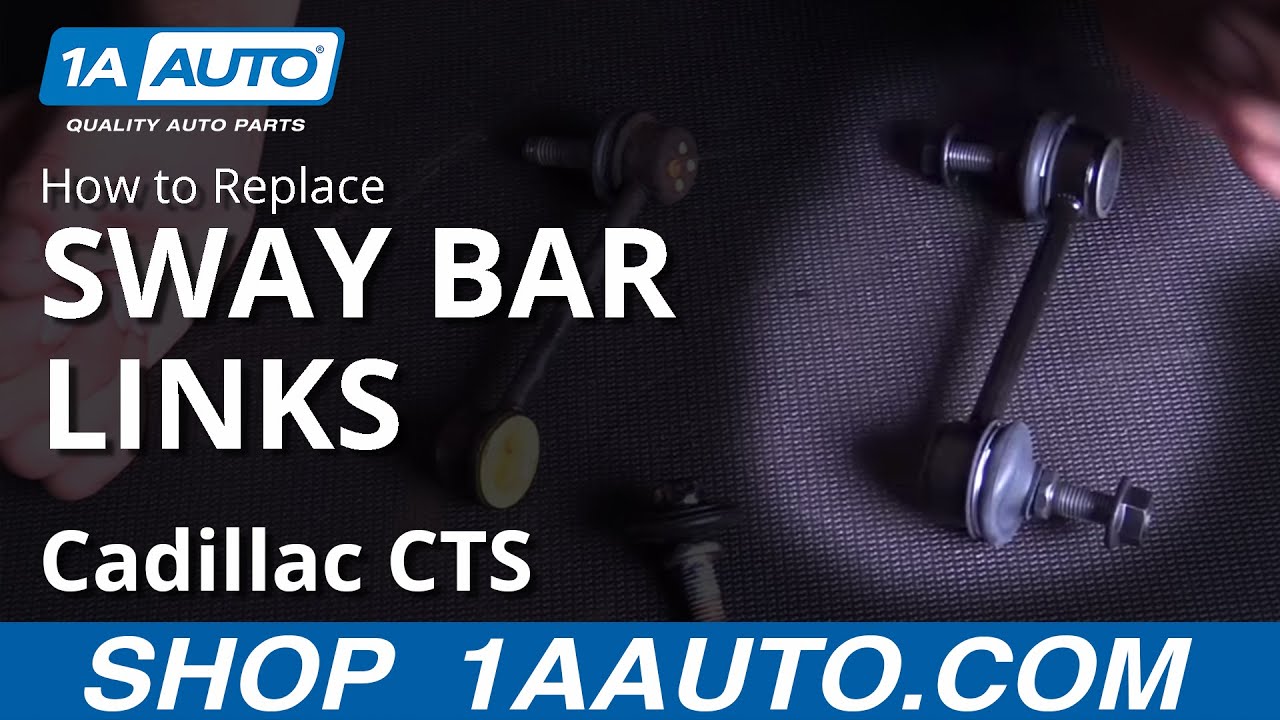
This one's tough to get a pair of vice grips on, so we'll pop off that harness retainer, pull down, pop our link off of the ball socket, clamp the vice grips onto the newly exposed ball socket to keep it from spinning while we remove the nut and remove it from the vehicle. Here we have ours that we removed from our vehicle and our new part from 1AAuto.com. What happens with these sway bar links a lot of the time is you can see the factory one. This ball socket just sits into this little plastic bushing here. We actually had to pop ours out in order to remove it. That can develop some play and allow these to click up and down when you hit bumps. It can sound like a serious suspension issue when in reality it's a small part and an easy fix.
Here we have our new part, and you can see they're the same length, same orientation here, and it comes with a new nut. The nice thing about these is that we'll be able to grab with a normal wrench, keep that from spinning, make it a lot easier to remove and install. So if you have a clicking noise when going over bumps and you've determined that it's your sway bar links, this new part from 1AAuto.com is going to go in, direct-fit just like your original equipment and fix you up right.
Reinstall your sway bar link into the slots. Make sure you line up the bottom hole as well and reconnect the harness retainer onto the sway bar link. We'll reinstall the nut on both ends of the sway bar link, and since our new sway bar links have that nice hex we showed you there on the backside of the joint, we use a 14mm stubby wrench to hold that in place while we tighten down the new nut with a 15mm socket ratchet and extension. Repeat these steps on the top side of the sway bar link. Torque the new nuts to 37 foot-pounds.
This is the part that we always recommend you replace in pairs, so repeat these steps on the opposite side. Reinstall the wheel onto the hub. We're going to bring them down as tight as we can while the tire is still in the air, and we'll finish tightening them once the vehicle's been taken off the jack stands. Always be sure to tighten your lug nuts in a cross pattern.
We'll jack our vehicle off the stands, with the weight of the vehicle back on the tire. If you don't have a torque wrench, get them as tight as you can by hand with a breaker bar. It takes a lot of force to break one of these lug studs, so you don't need to go crazy tight, but don't be afraid to put a little bit of your weight into them to make sure they're tight. Of course, if you do have a torque wrench available to you, you'll want to torque your lug nuts to 100 foot-pounds. You can see with the breaker bar we actually got it pretty close.
Thanks for tuning in. We hope this video helped you out. Next time you need parts for your car, please visit 1AAuto.com. Also check out our other helpful how-to and diagnosis videos.
Tools used
Brought to you by 1AAuto.com your source for quality replacement parts and the best service on the internet.
Hi. I'm Mike form 1A Auto, and I hope this How-To video help you out. The next time you need parts for your vehicle, think of 1AAuto.com.
To test your tie rod, what you'd want to do is lift one of your front wheels up and grab it by the sides of the tire there and kind of move it back and forth. If you feel play more than just the steering rack moving back and forth, then that's usually your tie rod is bad.
Tools you'll need are jack and jack stands, 18mm and 19mm sockets, a ratchet with a pipe or a breaker bar for some extra leverage, two large adjustable wrenches, 8mm and 18mm wrenches, tie rod fork, and a torque wrench, as well as a large hammer.
Start out by removing the front wheel, and if you don't have air tools like I do you'll want to loosen the lug nuts with the wheel on the ground, then raise your vehicle with a jack, support it with a jack stand and take the wheel off the rest of the way. Turn the wheel to make it easier to access the tie rod. Okay. So before you disassemble the tie rod, what you want to do is you want to measure from a fixed point, which I'll choose the end of the boot right here, then you want to measure to the middle of the tie rod. Okay. So, again, you're measuring from a fixed point on the rack itself, which is this clip here, to the middle of the tie rod. And you're going to set your new tie rod up that same length.
So here I just take a couple of measurements to make sure. Mine are measuring eleven and three-eighths, but it's obviously going to be different for each vehicle. Okay. Now, the tie rod is held in. There's a lock nut here. You need to grab that with a large adjustable wrench, then hold onto the tie rod itself in that slot and loosen that lock nut. Then there is a little nut here that holds the stud on, and then you need to separate the tie rod from the steering.
You put one arm through the nut here, this bolts onto the tie rod. Turn that nut about a quarter of a turn. This bolt is 18 millimeters. Take an easy way out ... so if you don't have an impact wrench you'll want to use a breaker bar or a ratchet with a piece of pipe to give you some extra leverage. Now, here, you can use either a tie rod tool only because there is limited clearance between the tie rod and the vacuum plate here. I'm actually going to use a fork. You just basically drive this fork right in that separates the tie rod and the steering knuckle.
Once you get the tie rod separated from the steering knuckle, you just turn it counter clockwise and get it off of the steering rack. Okay. The new tie rod from 1A Auto comes with a bolt, take the bolt off, and you put it back on.
Okay. It is kind of a reverse procedure. You thread the tie rod in, measure from the same point, from the end, I chose the end of the boot on the rack, make sure it measures the same distance. I take a couple of measurements. Make sure you do not twist the shaft that comes out of the steering rack because that also will change your alignment.
Speaking of alignments, we do recommend that you have an alignment performed after you do a replacement like this. Once you have the measurement correct, then you can put the tie rod back into the steering knuckle and start the bolt on there.
Okay. Now, that nut is a lock nut, so what you will want to do, or what I'm doing here, is holding the stud of the tie rod with a 8-millimeter wrench, and then using an 18-millimeter wrench to tighten up the nut.
Okay. So once I've gotten the 18-millimeter wrench tight, I grab another wrench, hook it on there, and just give it another good pull, tighten it up more before I torque it.
When I torque it to 65-foot pounds. Now, you want to put your wrench on the inner tire rod and get this locking nut back out against the outer tie rod, and then lock onto the outer tie rod and tighten so it will lock up against it.
Okay. Now, you can turn your wheels back straight, and then put your wheel and tire back on, start the lug nuts by hand first, then just preliminarily tighten them. Okay. With the car back on the ground, set your torque wrench to 90- to 95-foot pound and tighten your lug nuts using a star pattern as your guide.
We hope this helps you out. Brought to you by www.1AAuto.com, your source for quality replacement parts and the best service on the internet. Please feel free to call us toll free, 888-844-3393. We're the company that serves you on the internet and in person.

PSA59568